
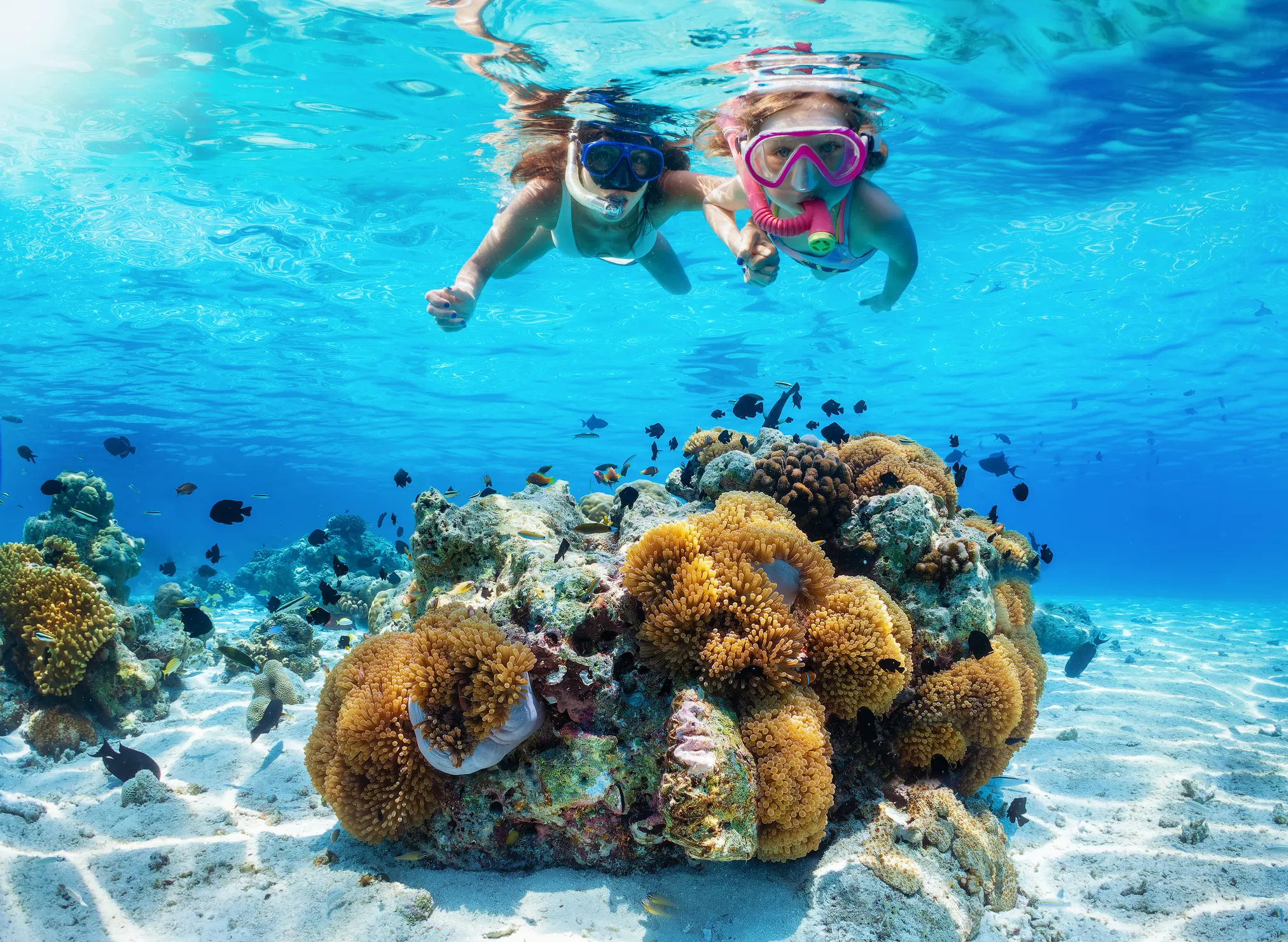
Snorkeling in the Red Sea is one of the easiest ways to discover the underwater world of Egypt without needing extensive diving experience. You do not need to be a certified diver, and you usually do not need complicated equipment. With a mask, snorkel and fins, beginners can float on the surface and observe colorful fish, coral formations and the remarkable underwater landscapes for which the Red Sea is famous.
For travelers staying in Hurghada, snorkeling can also be one of the most convenient ways to add a nature experience to a beach holiday. A boat excursion can take you away from the resort coastline and toward suitable snorkeling areas, where the main goal is not simply to swim but to observe the marine environment.
For first-time visitors, however, good preparation matters. Knowing how a mask works, how to breathe through a snorkel, how to clear water from the equipment and how to behave around coral reefs can make the difference between a stressful first attempt and a memorable experience.
This complete beginner’s guide explains everything you need to know about snorkeling in the Red Sea, from choosing equipment to comparing snorkeling with scuba diving.
Why Is Snorkeling in the Red Sea So Popular?
The Red Sea is particularly attractive to snorkelers because of its combination of warm waters, clear conditions in many areas and diverse marine habitats.
The underwater scenery can be dramatically different from what you see on land.
From the beach, you might see only blue water stretching toward the horizon. Once you put on your mask and place your face underwater, another environment appears.
You may see:
- colorful reef fish;
- coral formations;
- sandy seabeds;
- rocky reef structures;
- sea urchins;
- smaller marine organisms;
- different shades of blue and turquoise.
The exact marine life you encounter depends on the location, season, weather and daily conditions. Wildlife is never guaranteed, which is one reason responsible observation is important.
For travelers staying in Hurghada, organized excursions can make reaching suitable snorkeling areas easier. Best Tours Hurghada can be a useful starting point when looking for Red Sea excursions, but beginners should always check the specific itinerary, duration, equipment and included services of the tour they choose.
What Exactly Is Snorkeling?
Snorkeling is a surface-water activity.
You normally swim or float with your face underwater while breathing through a snorkel. Your body remains mostly at the surface, unlike scuba diving, where you descend underwater with a breathing system.
The basic idea is simple:
Look underwater + breathe through the snorkel + float or swim gently.
A mask creates an air space in front of your eyes and nose. This allows you to see clearly underwater.
The snorkel is a tube that allows you to breathe while your mouth and face remain in the water.
Fins help you move efficiently without using your arms constantly.
For many beginners, the hardest part is not swimming.
It is becoming comfortable with breathing while looking underwater.
Once that becomes natural, snorkeling can feel surprisingly easy.
How Does a Snorkel Work?
A traditional snorkel is simply a tube that extends above the surface.
When your face is underwater, you inhale and exhale through the mouthpiece while the upper end of the tube remains above the water.
The snorkel does not provide oxygen.
It only connects your mouth to the air above the surface.
This distinction is important.
You should never try to use a snorkel while completely submerged. If the opening goes underwater, you cannot breathe normally through it.
Some modern snorkels include splash guards or valves designed to reduce water entry. Even with these features, beginners should learn how to clear water from the snorkel.
The Basic Snorkeling Equipment
You do not need a huge amount of equipment.
The basic setup consists of:
1. Snorkeling mask
The mask allows you to see underwater.
A good mask should create a comfortable seal around your face without being painfully tight.
2. Snorkel
The snorkel lets you breathe while your face is in the water.
3. Fins
Fins increase propulsion and help you move with less effort.
4. Swimwear
Choose comfortable swimwear that stays secure while swimming.
5. Sun protection
A rash guard or suitable UV-protective clothing can be especially useful during long periods on the water.
How to Choose a Good Snorkeling Mask
For beginners, the mask is arguably the most important piece of equipment.
If water constantly enters the mask, you will probably spend more time adjusting it than enjoying the reef.
A simple fit test
Place the mask gently against your face without using the strap.
Inhale slightly through your nose.
If the mask stays in place for a moment without you holding it, the seal may be suitable.
Do not make the mask extremely tight.
Many beginners believe that tighter automatically means better.
It does not.
An excessively tight strap can actually make the mask uncomfortable and may contribute to leakage.
How to Prevent Your Mask From Fogging
Mask fogging is one of the most common beginner frustrations.
When warm air and water interact with the cooler inside surface of the mask, condensation can form.
Before entering the water, make sure the inside of the mask is properly prepared according to the manufacturer’s instructions or the guidance provided by your snorkeling operator.
If you are joining an organized excursion, ask the crew or snorkeling guide for assistance.
Do not assume that a foggy mask means the mask itself is defective.
How to Use a Snorkel for the First Time
Your first attempt should ideally happen in calm, shallow water or another controlled environment.
Start by standing or floating comfortably.
Place the mouthpiece gently between your teeth and close your lips around it.
Relax your jaw.
Then breathe slowly through your mouth.
At first, this may feel strange because your nose is covered by the mask and you are breathing differently from normal swimming.
Do not rush.
Take several slow breaths.
Once you are comfortable, place your face in the water while keeping the top of the snorkel above the surface.
Continue breathing slowly.
Why Beginners Should Avoid Panicking
A common first reaction is:
“I cannot breathe!”
In reality, you can breathe.
It simply feels different.
The best response is to lift your head, remove the snorkel if necessary and take a few normal breaths.
Then try again.
There is no reason to force yourself.
Snorkeling should be enjoyable.
A good instructor or guide can help you become comfortable gradually.
How to Clear Water From Your Snorkel
Water can occasionally enter the snorkel.
This is normal.
One basic technique is to return to the surface and blow firmly through the snorkel to push water out.
Some snorkels have purge valves that make this process easier.
Your guide should demonstrate the exact technique for the equipment you are using.
Do not panic if you suddenly taste seawater.
Simply return to a comfortable position and clear the snorkel.
How to Use Fins Correctly
Fins are designed to make swimming more efficient.
Beginners often make the mistake of kicking too aggressively.
Large, rapid movements can quickly make you tired.
Instead, use smooth movements originating from your legs.
Try to keep your knees relatively relaxed.
Your goal is not to kick as hard as possible.
Your goal is to move efficiently.
Your First Snorkeling Experience: What Should You Expect?
Your first snorkeling session may feel strange for the first few minutes.
You may need time to adjust to:
- breathing through your mouth;
- wearing the mask;
- using fins;
- floating face-down;
- seeing underwater;
- hearing differently beneath the surface.
Then something often changes.
You look down.
And suddenly the reef appears.
Fish move through the water.
The sunlight creates patterns on the seabed.
Coral structures appear beneath you.
At that point, many beginners stop thinking about the equipment and start observing the environment.
That is when snorkeling becomes enjoyable.
Do You Need to Be a Strong Swimmer?
Not necessarily.
However, you should be comfortable in the water and understand your own swimming ability.
Snorkeling conditions vary.
A calm lagoon is very different from open water with waves or currents.
If you are not confident in the water, tell your guide before entering.
A flotation device may be appropriate in some situations.
Never allow embarrassment to influence your safety decisions.
Snorkeling From a Boat vs. From the Beach
Both options can be enjoyable.
Beach snorkeling
Advantages include:
- easy access;
- no boat journey;
- flexibility;
- convenient for beginners.
However, not every beach has an accessible or healthy reef immediately offshore.
Boat snorkeling
Boat excursions can take you to different areas away from the resort coastline.
Advantages may include:
- access to offshore reefs;
- changing locations;
- a full-day experience;
- opportunity to combine snorkeling with a boat trip.
If you choose a boat excursion with Best Tours Hurghada, check the exact itinerary before booking. The number of snorkeling stops, duration, transfer arrangements and equipment can vary between excursions.
What Happens During a Typical Snorkeling Excursion?
There is no single standard itinerary.
However, an organized Red Sea boat trip may include several stages.
Pickup
Depending on the excursion, transportation from your hotel may be arranged.
Boat departure
You travel toward the planned snorkeling area.
Safety briefing
The crew or guide explains basic rules and equipment.
First snorkeling stop
You enter the water under the conditions specified by the crew.
Break
You return to the boat, rest, drink water and perhaps have food.
Additional stop
Some excursions include another snorkeling location.
Return
You travel back toward the harbor and eventually return to your hotel area.
Always check the specific tour description because programs differ.
How to Behave Around Coral Reefs
This is one of the most important sections for beginners.
Coral reefs are living ecosystems.
They are not underwater rocks.
That means your behavior matters.
Never stand on coral
Even if the reef looks solid, contact can damage fragile coral structures.
Do not touch coral
Your hands can cause physical damage, and touching marine organisms can stress or harm them.
Do not collect pieces of coral
Do not take coral, shells or marine organisms as souvenirs.
Do not feed fish
Feeding can alter natural behavior and disrupt the ecosystem.
Keep your distance from animals
If a turtle, ray or another animal appears, allow it to move freely.
Do not chase it for a photograph.
Why Coral Reefs Need Protection
Coral reefs are complex ecosystems supporting numerous marine organisms.
They can be affected by:
- physical damage;
- pollution;
- changes in water conditions;
- excessive human contact;
- climate-related pressures.
Tourists may not notice the damage caused by a single person touching coral.
But repeated contact from many visitors can have consequences.
The best snorkeling experience is therefore one where you observe without interfering.
How to Watch Marine Life Responsibly
The ideal snorkeler behaves more like an observer than a participant.
Instead of chasing fish, stay relatively still.
Let them come into view.
Instead of touching coral, observe its shapes and colors.
Instead of trying to make animals move for a photograph, wait patiently.
This often produces better memories and better photographs.
What Marine Life Might You See?
The Red Sea contains a rich variety of marine life.
Depending on the location and conditions, snorkelers may encounter different reef fish and other marine organisms.
Possible sightings can include:
- colorful reef fish;
- butterflyfish;
- angelfish;
- parrotfish;
- wrasses;
- moray eels;
- sea urchins;
- rays;
- sea turtles in some areas.
However, wildlife encounters are unpredictable.
A responsible excursion should never promise that a particular wild animal will definitely appear.
Snorkeling vs. Diving: What’s the Difference?
Snorkeling and scuba diving are related but fundamentally different activities.
Snorkeling
You remain primarily at the surface.
You breathe through a snorkel.
You generally need minimal training.
It is accessible to many travelers.
Scuba diving
You descend underwater.
You breathe from a scuba cylinder through a regulator.
You need appropriate instruction and, depending on the type of dive, certification or supervised introductory training.
You can remain underwater for longer periods and explore deeper environments.
Who Should Choose Snorkeling?
Snorkeling may be the better choice if you:
- are a complete beginner;
- want a simple introduction to marine life;
- prefer staying at the surface;
- have limited vacation time;
- want a family-friendly water activity under suitable conditions;
- are nervous about deeper water.
It is also an excellent first step for travelers wondering whether they might eventually enjoy diving.
Who Should Choose Diving?
Scuba diving may be more suitable if you:
- want to explore deeper reef environments;
- enjoy underwater adventure;
- are prepared to complete appropriate training;
- want longer underwater experiences;
- are interested in learning more about marine ecosystems.
Diving requires greater commitment than snorkeling.
It should always be approached with proper instruction and safety procedures.
Can You Try Diving Without Certification?
In many destinations, introductory or discovery dives are available under professional supervision.
However, the exact requirements vary.
A beginner should never attempt independent scuba diving without the appropriate training.
If you are interested in trying diving during your Hurghada holiday, ask the operator about the exact training and supervision included in the experience.
Is Snorkeling Safe?
For many people, snorkeling is a low-complexity water activity, but it is not risk-free.
Potential hazards include:
- waves;
- currents;
- exhaustion;
- sun exposure;
- dehydration;
- poor swimming ability;
- panic;
- boat traffic;
- marine hazards.
The best approach is simple:
Know your limits.
Follow your guide.
Stay within the designated area.
Do not swim away from the group without permission.
Sun Protection While Snorkeling
Many beginners forget how much sun exposure they receive in the water.
You may not feel as hot because you are wet.
That does not mean you are protected from the sun.
Consider:
- reef-safe or environmentally considerate sun protection where appropriate;
- UV-protective clothing;
- a rash guard;
- a hat while on the boat;
- sunglasses;
- regular hydration.
Avoid relying solely on sunscreen.
Physical protection can be especially useful during long boat excursions.
What Should You Eat Before Snorkeling?
You do not want to enter the water immediately after a very heavy meal.
A light or moderate meal may be more comfortable.
During a full-day boat excursion, stay hydrated and follow the food and drink arrangements provided by the operator.
If you are prone to motion sickness, food choices may also affect how comfortable you feel.
How to Deal With Seasickness
Boat travel can cause seasickness, especially for people who are not accustomed to being on the water.
Symptoms can include:
- nausea;
- dizziness;
- sweating;
- headache;
- general discomfort.
Practical strategies
Try to:
- sleep well before the trip;
- eat a light meal;
- stay hydrated;
- get fresh air;
- focus on the horizon;
- avoid reading while the boat is moving.
If you know that you are particularly prone to motion sickness, speak with a healthcare professional or pharmacist about appropriate preventive options before your trip.
Beginner Snorkeling Tips
Tip 1: Practice before the excursion
If possible, practice breathing through the snorkel in a pool or calm shallow water.
Tip 2: Relax
Tension makes swimming harder.
Tip 3: Do not over-kick
Smooth movement saves energy.
Tip 4: Keep your distance from the reef
You can see it without touching it.
Tip 5: Look around
Do not spend the entire time looking straight down.
The best marine encounters can happen beside or slightly ahead of you.
Tip 6: Listen to your guide
Local guides understand the conditions of the area.
Tip 7: Take breaks
You do not have to stay in the water continuously.
Snorkeling With Children
Snorkeling can be an exciting family experience, but children’s swimming ability and comfort in the water vary considerably.
Before booking, check:
- minimum age;
- swimming requirements;
- available flotation equipment;
- supervision arrangements;
- water conditions.
Never assume that a child who enjoys a hotel pool will automatically be comfortable in open sea.
Start slowly.
Let the child become familiar with the mask and snorkel before expecting them to swim far from shore or the boat.
What Should You Pack for a Red Sea Snorkeling Trip?
Essential Packing Checklist
Water and hydration
- drinking water;
- reusable bottle where practical.
Sun protection
- sunscreen;
- sunglasses;
- hat;
- UV-protective clothing.
Clothing
- swimwear;
- lightweight cover-up;
- dry change of clothes.
Equipment
Depending on the excursion:
- mask;
- snorkel;
- fins.
Many organized excursions provide snorkeling equipment, but always confirm this before departure.
Personal items
- phone or waterproof camera;
- waterproof bag;
- small towel;
- personal medication if needed;
- motion-sickness supplies if appropriate.
Complete Beginner Checklist
Before leaving your hotel, ask yourself:
☐ Do I have enough water?
☐ Do I have sun protection?
☐ Do I have suitable swimwear?
☐ Do I have sunglasses?
☐ Do I have a hat?
☐ Do I have a dry change of clothes?
☐ Have I checked whether snorkeling equipment is provided?
☐ Do I know the meeting point?
☐ Do I know the expected return time?
☐ Have I checked the weather and sea conditions?
☐ Have I told the guide about any relevant limitations?
If the answer to all of these is yes, you are much better prepared.
How to Choose a Snorkeling Excursion in Hurghada
There are many different excursion formats.
Do not choose based solely on a beautiful photograph.
Compare:
Duration
A short trip may suit beginners who are unsure how they will feel on a boat.
A full-day trip may be better for travelers who want a broader experience.
Number of stops
More stops can mean more variety, but also more time getting in and out of the water.
Group size
Some travelers prefer larger organized groups, while others value a quieter experience.
Equipment
Confirm whether mask, snorkel and fins are provided.
Transfers
Check whether hotel pickup is included and from which areas.
Food and drinks
Verify what is actually included.
Safety
Look for clear safety instructions and qualified guides.
Best Tours Hurghada can be considered when comparing Red Sea excursions from Hurghada, but the specific tour details should always be checked before booking.
How to Make Your First Snorkeling Experience Better
The best first snorkeling experience does not necessarily involve the most famous reef.
It involves the right conditions.
For beginners, calm water, clear instructions and adequate time to become comfortable can be more important than trying to visit as many locations as possible.
Do not feel pressured to spend the entire excursion underwater.
Take your time.
Observe.
Float.
Breathe.
Look around.
And remember that you are visiting a living ecosystem.
Common Beginner Mistakes
Wearing the mask too tightly
This can cause discomfort without necessarily improving the seal.
Holding your breath
You can breathe normally through the snorkel when the tube is above the surface.
Swimming too fast
This wastes energy.
Touching the reef
This can cause damage.
Chasing animals
It stresses wildlife and rarely produces better photographs.
Forgetting the sun
Water does not eliminate UV exposure.
Ignoring the guide
Local knowledge is valuable.
Staying in the water when exhausted
Get out and rest.
What Makes Snorkeling in the Red Sea Memorable?
It is the feeling of entering another environment without needing complicated technical equipment.
One moment you are standing on a boat.
The next, your face is underwater.
The sounds of the surface become distant.
Light moves through the water.
Fish appear beneath you.
The reef seems to continue in every direction.
For a first-time snorkeler, that transformation can be surprisingly powerful.
And perhaps the best part is that you do not have to be an experienced diver to appreciate it.
FAQ – Snorkeling in the Red Sea
Is snorkeling in the Red Sea suitable for beginners?
Yes, many beginners can enjoy snorkeling under suitable conditions and proper supervision. Your comfort in the water and the specific sea conditions are important factors.
Do I need to know how to swim?
You should be comfortable in the water, but the requirements vary depending on the excursion. Tell the operator or guide if you are not a confident swimmer.
Do I need to bring snorkeling equipment?
Not necessarily. Many organized excursions provide equipment, but this varies. Confirm what is included before departure.
Can I snorkel if I have never done it before?
Absolutely. Start slowly and practice breathing through the snorkel before swimming farther from shore or the boat.
Is snorkeling easier than diving?
For most beginners, snorkeling is simpler because you remain at the surface and do not need scuba equipment or the same level of training.
Can I see coral reefs from the surface?
Yes. In suitable locations, reefs can be visible from the surface, although depth and visibility vary.
Can I touch coral?
No. Coral reefs are delicate living ecosystems and should not be touched.
Can I feed the fish?
It is best not to. Feeding can alter natural behavior and affect the ecosystem.
What if water enters my mask?
Stay calm, return to a comfortable position and follow the technique taught by your guide for clearing the mask.
What if water enters my snorkel?
Return to the surface and clear the snorkel using the appropriate technique demonstrated by the guide.
Can children go snorkeling?
Many children can enjoy snorkeling under appropriate conditions, but age requirements and supervision vary between excursions.
What should I wear snorkeling?
Comfortable swimwear and sun-protective clothing are good choices. A rash guard can provide additional protection during extended exposure.
How can I avoid seasickness?
Fresh air, looking toward the horizon, staying hydrated and avoiding heavy meals can help. If you regularly experience motion sickness, discuss suitable options with a healthcare professional before traveling.
Is snorkeling available all year in Hurghada?
Snorkeling excursions operate in different seasons, but weather and sea conditions vary. Always check current conditions and the availability of your chosen excursion.
Can I take underwater photographs?
Yes, if you have suitable equipment. However, photography should never involve touching coral or chasing marine animals.
Should I choose snorkeling or diving?
Choose snorkeling if you want a simple surface-level introduction to the Red Sea. Choose diving if you want to explore deeper underwater environments and are willing to complete the required training.
How long should a beginner snorkel?
There is no universal ideal duration. Start with a comfortable session and take breaks when needed rather than trying to stay underwater continuously.
Is a boat trip better than snorkeling from the beach?
Neither is automatically better. Boat trips can provide access to offshore reefs, while beach snorkeling offers simplicity and flexibility.
How can Best Tours Hurghada help?
Best Tours Hurghada can be a starting point for travelers looking for Red Sea excursions from Hurghada. Before booking, compare the specific itinerary, duration, snorkeling stops, equipment, transportation and other included services.
Final Thoughts: Your First Snorkeling Adventure in the Red Sea
Your first snorkeling experience does not have to be complicated.
You do not need to be an expert swimmer.
You do not need expensive equipment.
And you do not need to know the names of every fish you see.
You simply need to approach the experience with patience and respect.
Learn how your mask fits.
Practice breathing through the snorkel.
Move slowly.
Listen to your guide.
Protect yourself from the sun.
Stay hydrated.
And most importantly, remember that the reef is not an amusement park.
You are a visitor in a living ecosystem.
The most responsible snorkeler leaves the reef exactly as they found it.
For travelers staying in Hurghada, a Red Sea snorkeling excursion can become one of the highlights of an Egyptian holiday. It offers a completely different perspective from the hotel, beach and desert. Under the surface is a colorful environment that cannot be appreciated fully from land.
If you are considering booking a Red Sea excursion, Best Tours Hurghada can be one option to explore when planning your activities. Compare the available programs carefully and choose an experience that matches your swimming ability, interests and preferred pace.
Ready to discover the Red Sea?
Choose your snorkeling experience, prepare your equipment, respect the marine environment and take your time.
The first time you put your face underwater and see a colorful reef beneath you, you may understand why snorkeling has become one of the most popular ways to experience the Red Sea.
Your Egyptian adventure does not have to end at the beach. Sometimes, the most fascinating part of the journey is just beneath the surface.